HR Built for Factories, Offices, and Everyone in Between
Manage multiple shifts, employee categories, warehouses, and offices in one HRMS. From biometric attendance and payroll processing to leave approvals and employee self-service, IEV connects the entire workforce inside your ERP.
Everything Your HR Team Runs, in One Place.
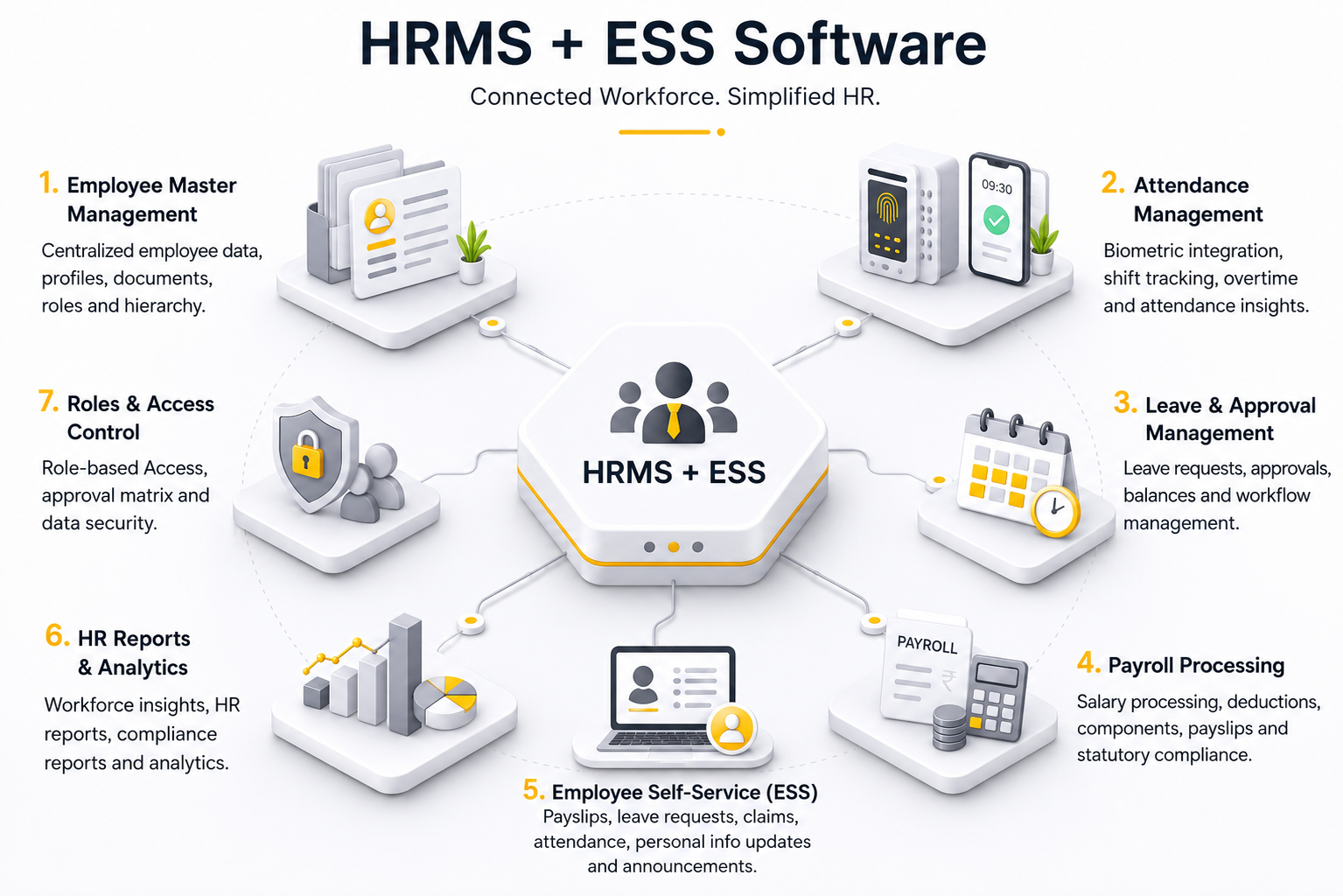
Manage employee data, biometric attendance, payroll, leave, approvals, and self-service in one connected system. Built inside PCSOFT's ERP, so HR data flows directly into finance, costing, and reporting, no exports, no reconciliation, no duplicate entries between systems. Whether you're running one plant or fifteen, one shift or three, IEV HRMS + ESS handles the full workforce lifecycle without HR teams stitching data together across tools.
Engineered for Growth. Structured for Profit.
Six strategic reasons why top technology consultants, system integrators, and software distributors partner with PCSOFT to scale their enterprise practices.
Statutory Compliance & Reports
Generate reports for ESI, PF, PT, LWF, income tax transactions, payroll documentation, statutory records, compliance summaries, and e-filing support where applicable.
Alerts & Notifications
Configure SMS and email alerts for approvals, attendance exceptions, pending requests, payroll deadlines, employee updates, leave status and HR follow-ups requiring timely management action.
Security Built Into Daily Workforce Operations
HRMS + ESS handles sensitive employee, attendance, payroll, statutory, and approval-related data, so access control cannot be treated as an afterthought. The system supports controlled user access, defined workflows, biometric attendance integration, approval routing, and secure HR transaction handling, helping organisations protect workforce information while keeping HR, payroll, and employee self-service processes structured and traceable.
Connect biometric machines, card-based attendance devices, access control systems, and other workforce data capture hardware with HRMS and payroll workflows. Attendance data can be imported into the system without repeated manual entry, helping HR teams reduce punching errors, duplicate records, and delays in attendance reconciliation. This is useful for factories, offices, warehouses, sites, and multi-shift environments where employee time data needs to be captured accurately and processed consistently.
Capture, organise, and manage biometric attendance data across departments, locations, shifts, and employee categories. HR teams can maintain accurate attendance history, verify employee presence, monitor irregularities, and use biometric records as a dependable input for leave calculation, overtime review, late mark tracking, and payroll processing. This creates a more reliable attendance base than manual registers or disconnected device exports.
Track daily attendance, shift timings, working hours, late marks, absenteeism, overtime, missed punches, manual corrections, weekly offs, holidays, and attendance exceptions through a structured system. Attendance records can be reviewed by HR, managers, and authorised users for workforce planning, payroll readiness, absence monitoring, and department-wise attendance analysis. This gives organisations better control over employee time records before they affect payroll.
Generate HR, attendance, payroll, approval, compliance, and workforce reports for faster operational review. Teams can monitor employee records, leave status, attendance trends, payroll inputs, overtime, absenteeism, statutory data, pending approvals, department-wise headcount, and HR exceptions from structured reports. This reduces spreadsheet dependency and gives management a clearer view of workforce activity, payroll readiness, and process gaps across the organisation.
Connect employee master data, attendance records, leave balances, salary structures, deductions, loans, advances, bonuses, tax inputs, statutory records, and approval workflows with payroll processing. This helps HR and finance teams work from the same verified workforce data instead of reconciling separate files. Integrated data flow improves payroll accuracy, reduces last-minute corrections, and makes salary processing more controlled and traceable.
Record authorised manual attendance entries for missed punches, field visits, duty corrections, late entries, shift changes, or exceptional attendance cases. Manual punch entries can be routed through approval control, user permissions, and audit visibility so corrections do not happen informally or without traceability. This helps organisations handle real-world attendance exceptions while maintaining discipline in attendance and payroll records.
Connect HR Processes With Payroll, Approvals and Compliance
Reduce Manual HR Administration
Improve Payroll Accuracy
Strengthen Approval Control
Improve Employee Experience
Support Compliance Readiness
Increase Workforce Visibility
See How HRMS + ESS Fits Your Workforce Operations
Discuss your attendance, payroll, leave, approval, compliance, and employee self-service requirements with our team, and understand how HRMS + ESS can be configured around your workforce processes.